
Search Alabama Felony Records
Alabama felony records show arrests, charges, and court outcomes for serious crimes across the state. These records are kept by county Circuit Clerks and the Alabama Law Enforcement Agency. Anyone can search court records in Alabama. The state has 67 counties, and each one stores felony case files at the local courthouse. This page shows you how to find felony records online and in person.
Alabama Felony Records Quick Facts
What Alabama Felony Records Contain
Felony records in Alabama hold key facts about serious crimes. They show the charges filed against a person. They list court dates and case outcomes. A felony record tells you if someone was found guilty or not. It shows the sentence given by the judge. These records come from Circuit Courts in each of Alabama's 67 counties.
A typical felony record in Alabama includes the defendant's full name and date of birth. It shows the arrest date and the charges. You can see the case number and the court that handled it. The record lists all hearings and motions filed. It shows the final verdict and any sentence. If the person went to prison, that info is there too. Bond amounts and release dates are part of the file as well.
Felony cases in Alabama cover crimes like murder, rape, robbery, and drug trafficking. Burglary and theft of high-value items are also felonies. Assault that causes serious harm falls into this group. Any crime that can bring more than one year in prison is a felony in Alabama. These are the most serious offenses under state law.
How to Search Alabama Felony Records Online
You can search felony records from home. The state offers online tools that work around the clock. These systems let you look up court cases and inmates. Some are free. Others charge a small fee. Here are the main ways to search in Alabama.
The Alacourt ACCESS portal gives you access to trial court records. This includes all felony cases filed in Circuit Courts across Alabama. You can search by name or case number. The system covers criminal, civil, and traffic cases. It shows charges, court dates, and case outcomes. Alacourt is the best tool for finding felony court records in Alabama.
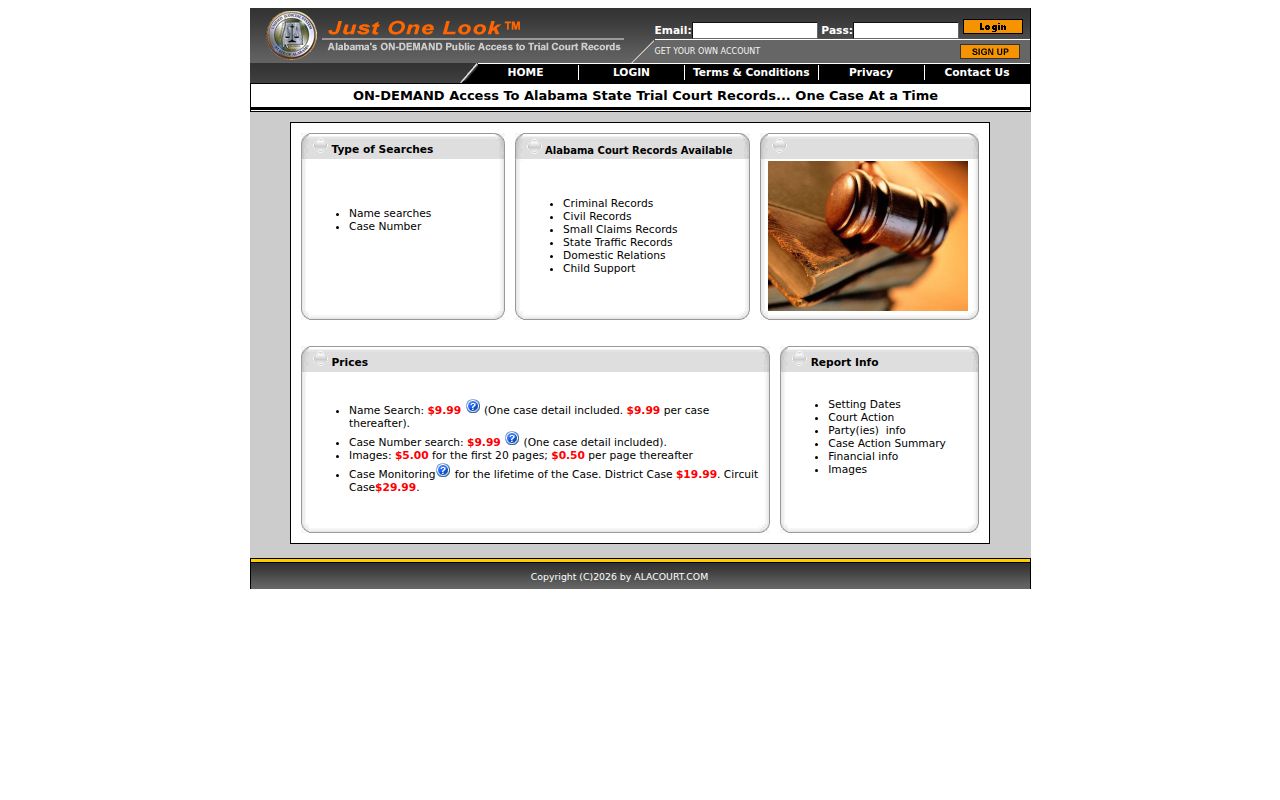
The screenshot above shows the Alacourt search page. You pick a search type and enter the name. Results show all matching cases from courts across Alabama. You can view case details and download documents.
The Alabama Department of Corrections runs a free inmate search tool. It shows people now in state prison. You can search by name or AIS number. The AIS is a six-digit ID given to each inmate. Results show the facility, sentence, and custody level. This search is free and open to all. It does not show people who have been released.
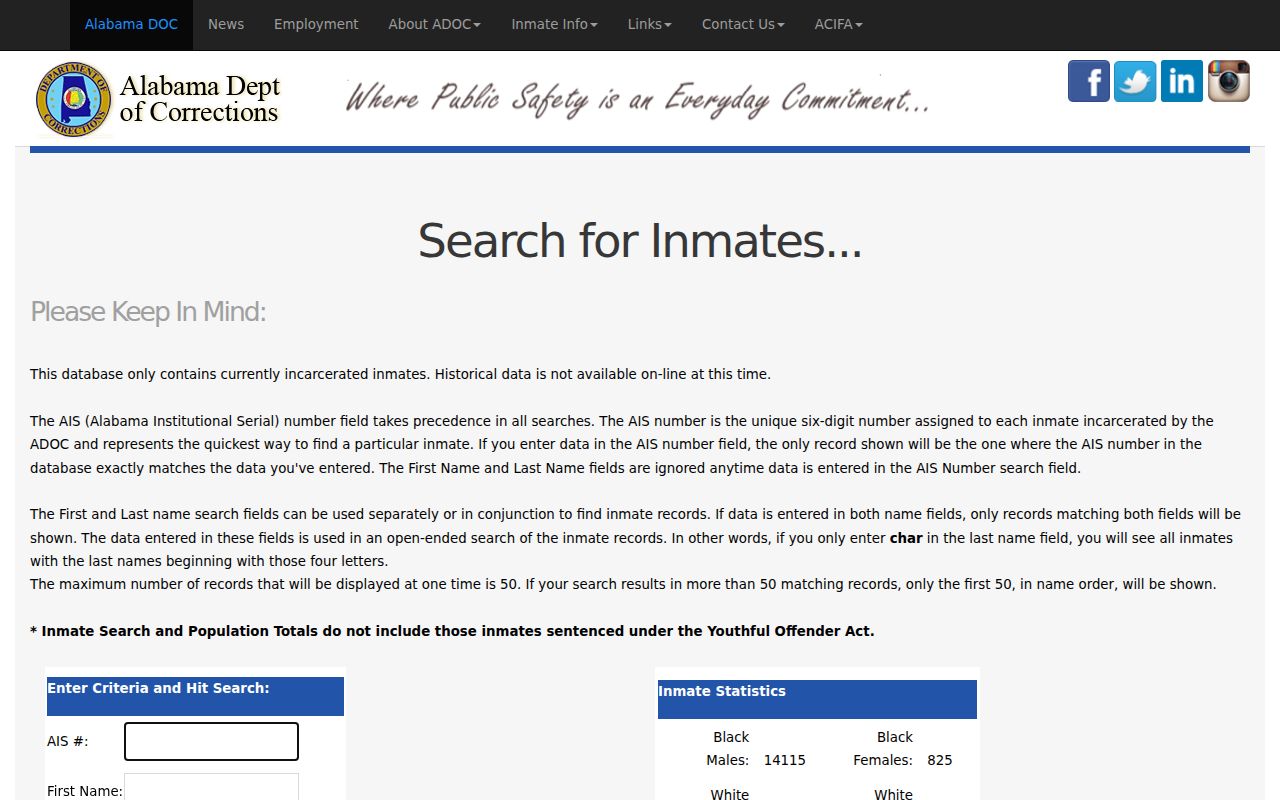
The ADOC search page appears above. It lets you find anyone now held in an Alabama state prison. The search is fast and free.
Alabama Criminal History from ALEA
The Alabama Law Enforcement Agency keeps the state criminal history database. ALEA stores records for anyone arrested in Alabama. This includes felony and misdemeanor arrests. The agency also holds fingerprint files and mugshots. ALEA is the main source for official background checks in Alabama.
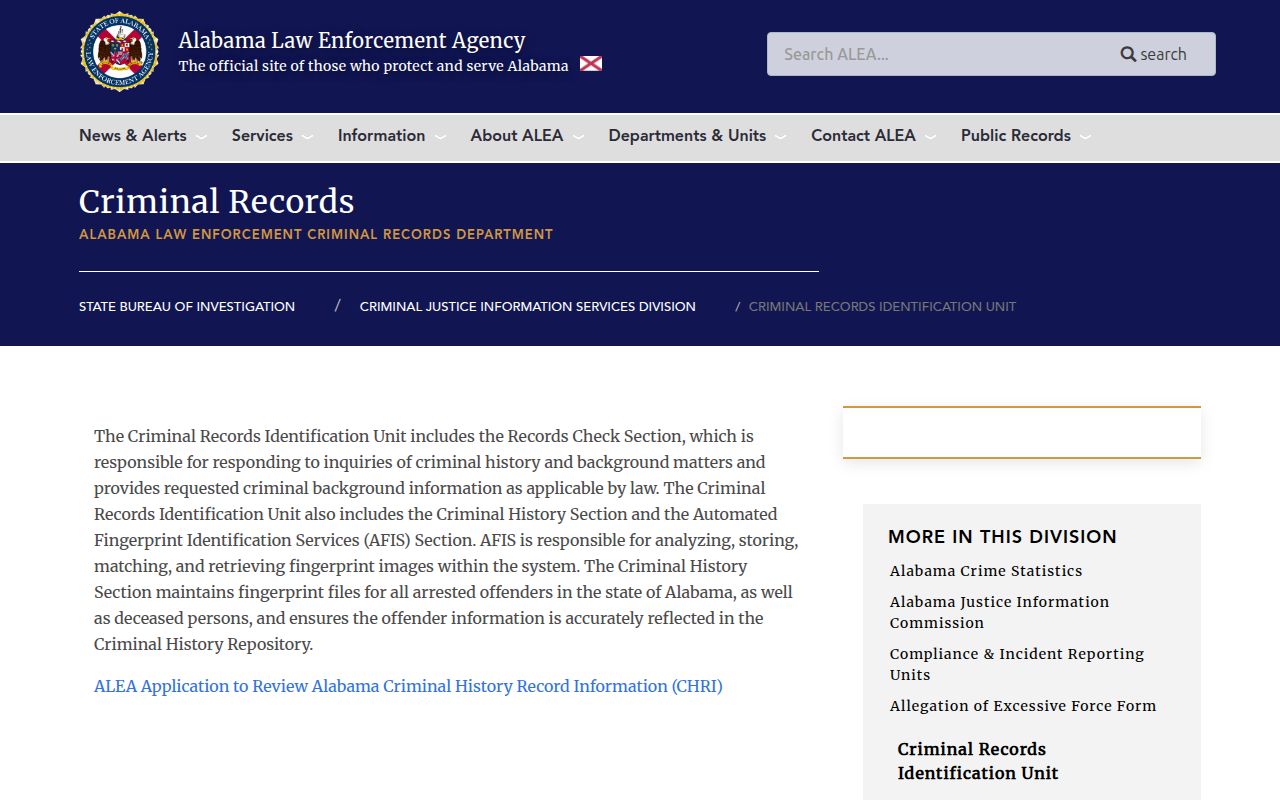
ALEA criminal history is not public. You cannot just look it up online. To get your own record, you must fill out a form and give your fingerprints. A law enforcement agency must take the prints. You send the form and prints to ALEA with the fee. They will mail you a copy of your criminal history in Alabama.
To request your Alabama criminal history, you need ALEA CJIS Form 46. Fill it out and get fingerprints at a local police station. Send the form, prints, and a money order to ALEA. Processing takes several weeks. The record shows all arrests and court outcomes on file in Alabama.
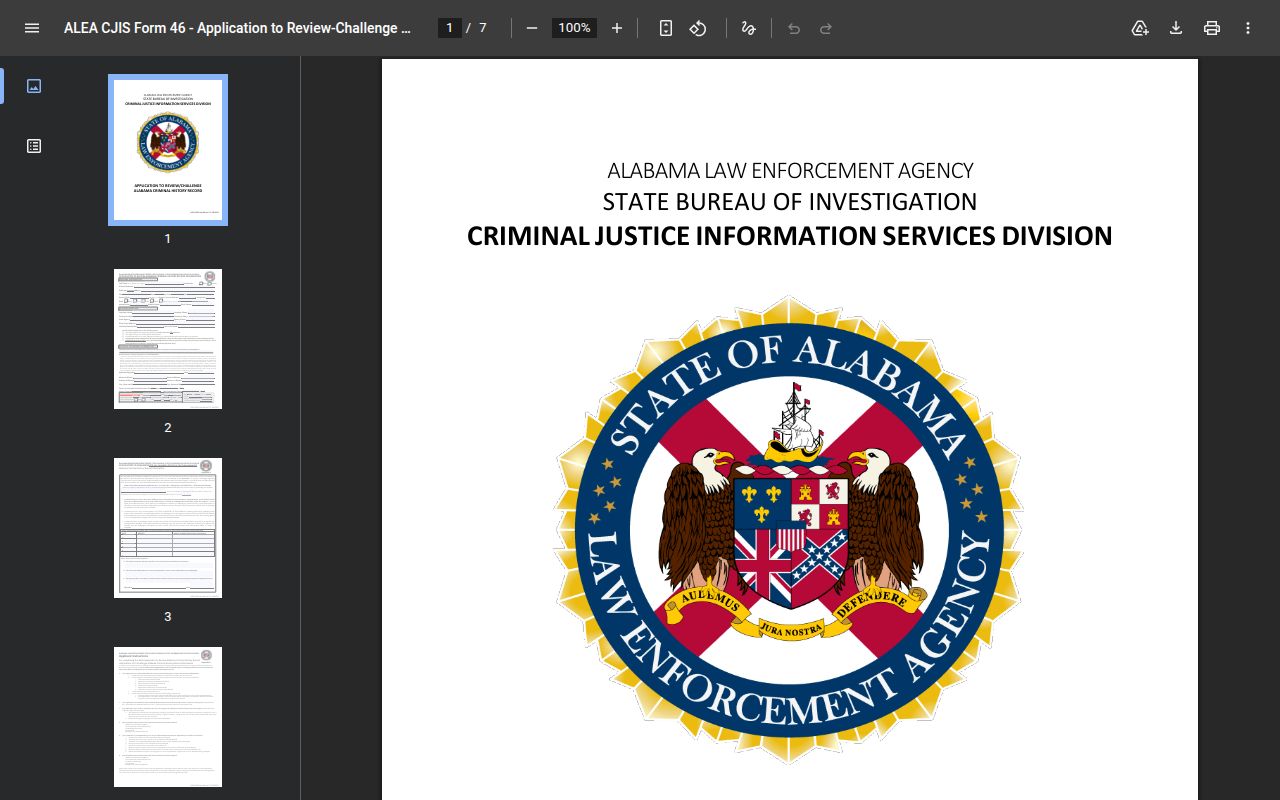
The form shown above is the official request for your criminal history. ALEA uses fingerprints to make sure they send records to the right person.
Felony Classes in Alabama
Alabama groups felonies into four classes. Class A is the most serious. Class D is the least serious felony. The class affects the sentence a judge can give. Here is how Alabama breaks down felony crimes.
Under Code of Alabama § 13A-5-6, the sentences are:
- Class A Felony: 10 to 99 years or life in prison
- Class B Felony: 2 to 20 years in prison
- Class C Felony: 1 year and 1 day to 10 years in prison
- Class D Felony: 1 year and 1 day to 5 years in prison
Murder and rape are Class A felonies. Robbery and first-degree assault are Class B. Drug possession with intent to sell can be Class B or C. Theft of property worth over $2,500 is a Class C felony. Fourth-degree theft is a Class D felony. The crime and facts of each case set the class in Alabama.
Repeat offenders face longer sentences. Under Code of Alabama § 13A-5-9, people with prior felonies can be labeled habitual offenders. A second felony can double the max sentence. A third can bring life in prison. Alabama takes repeat crimes very seriously.
County Felony Records in Alabama
Each county in Alabama has a Circuit Clerk who keeps court records. The Circuit Court handles all felony cases. When someone is charged with a felony, the case goes to Circuit Court. The clerk files all papers and tracks the case. After it ends, the records stay with the clerk. You can get copies from that office.
To search county records, you can visit the clerk in person. Many counties also have online access through Alacourt. Each county has its own page on the Alacourt system. You can search cases filed in that county. Staff at the clerk's office can help you find what you need. They can make copies for a fee.
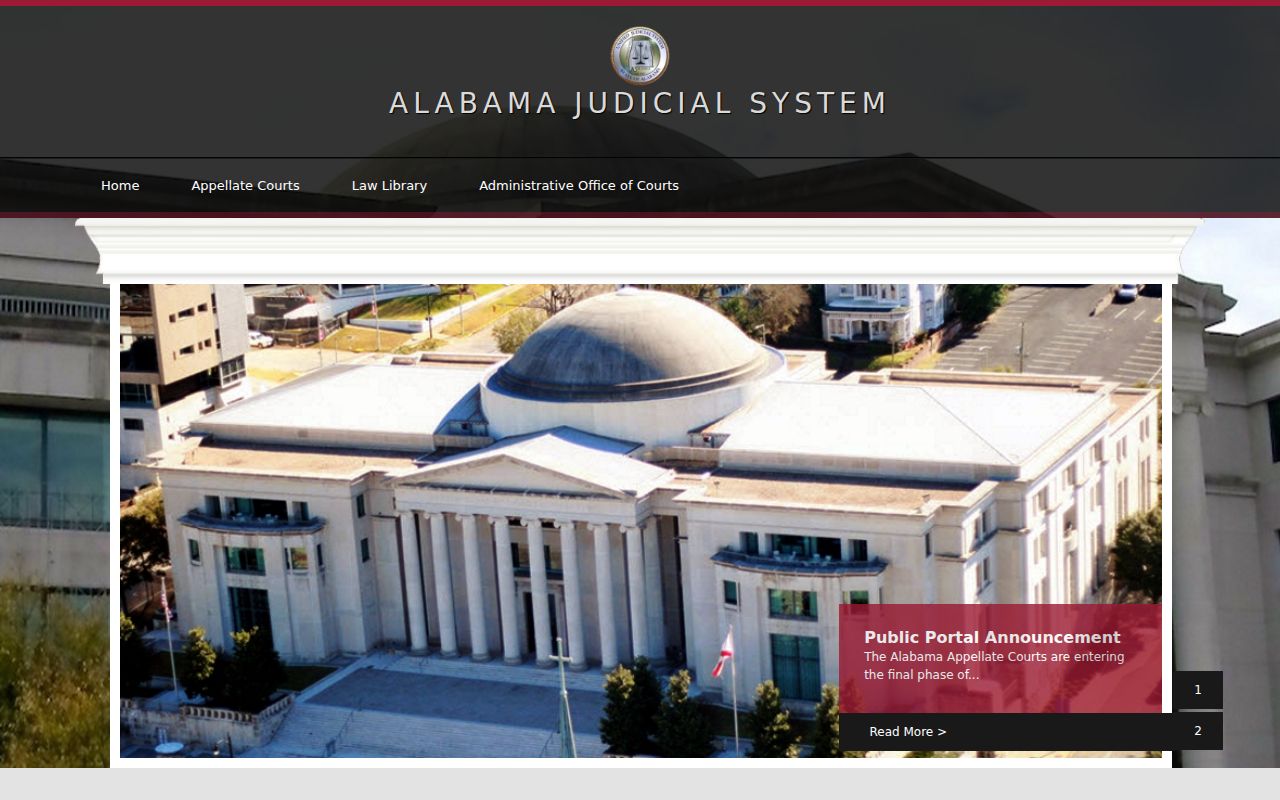
The Alabama Judicial System website shown above links to court info for all 67 counties. You can find contact details, forms, and filing rules. Each county Circuit Clerk has its own site with local info.
Alabama Felony Expungement
Some felony records can be erased in Alabama. This is called expungement. Not all cases qualify. The rules are strict. But if you meet them, you can ask a court to seal your record. Once sealed, most people cannot see it. It will not show up on most background checks.
Under Code of Alabama § 15-27, you can ask to expunge certain felony records. Charges that were dismissed may qualify. Cases where you were found not guilty can be erased. If you got a pardon with rights restored, you may be able to expunge a conviction. Violent felonies have stricter rules and often cannot be expunged.
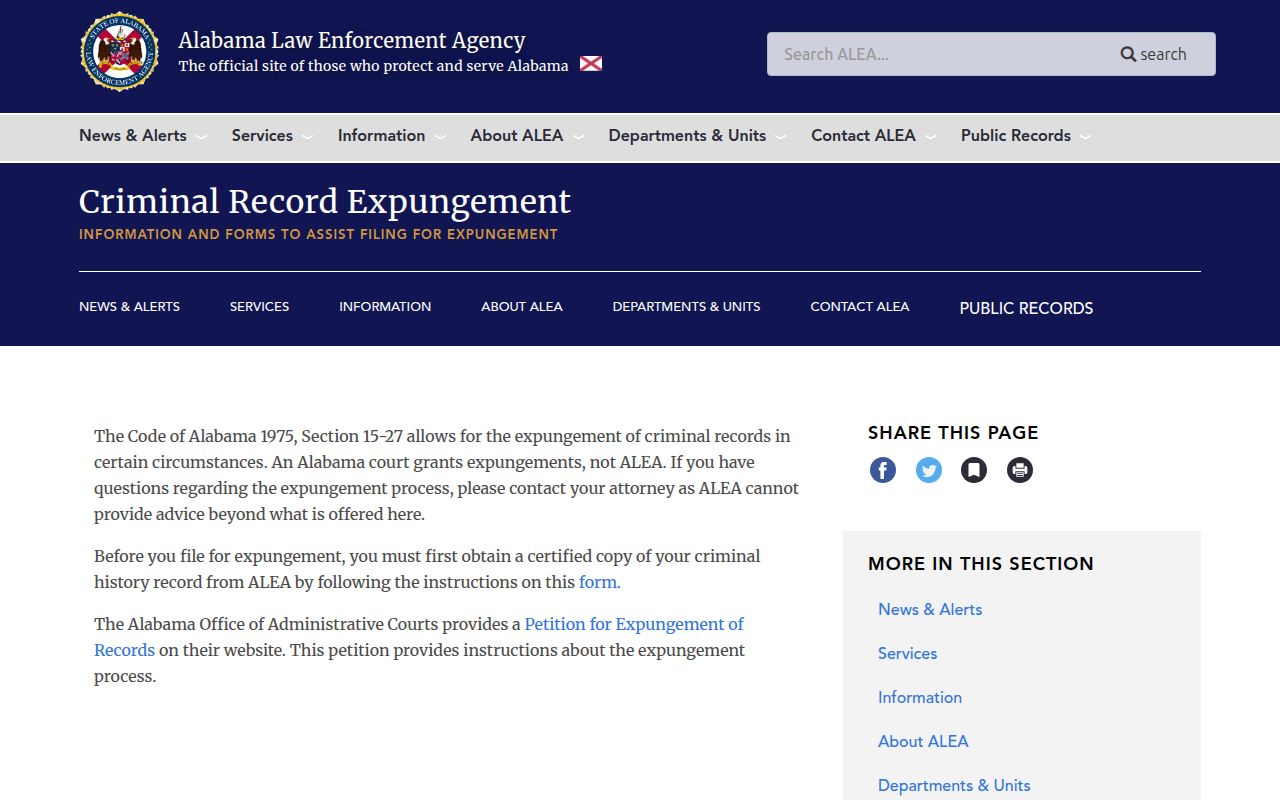
The ALEA page above has more info on expungement. A court grants the expungement, not ALEA. But ALEA updates its records after a court order. You file a petition in Circuit Court to start the process in Alabama.
Are Felony Records Public in Alabama
Yes. Court records are public in Alabama. Under Code of Alabama § 36-12-40, citizens have the right to inspect public records. This includes felony case files held by Circuit Clerks. You do not need to be part of the case. You do not need to give a reason. The records are open to anyone.
Some limits exist. Juvenile records are sealed. Cases that a judge has ordered sealed are not public. Expunged records are hidden from view. Some personal info like Social Security numbers may be redacted. But in general, felony court records are open in Alabama.
ALEA criminal history is different. It is not a public record. You can only get your own history or request it for an employee with their consent. Misuse of criminal records can lead to felony charges under Code of Alabama § 41-9-601. Fines range from $5,000 to $10,000. Jail time can reach five years.
Browse Alabama Felony Records by County
Each county in Alabama has a Circuit Clerk who keeps felony court records. Pick a county below to find local contact info and resources.
Felony Records in Major Alabama Cities
Residents of major cities search felony records at their county Circuit Court. Pick a city below to learn more.